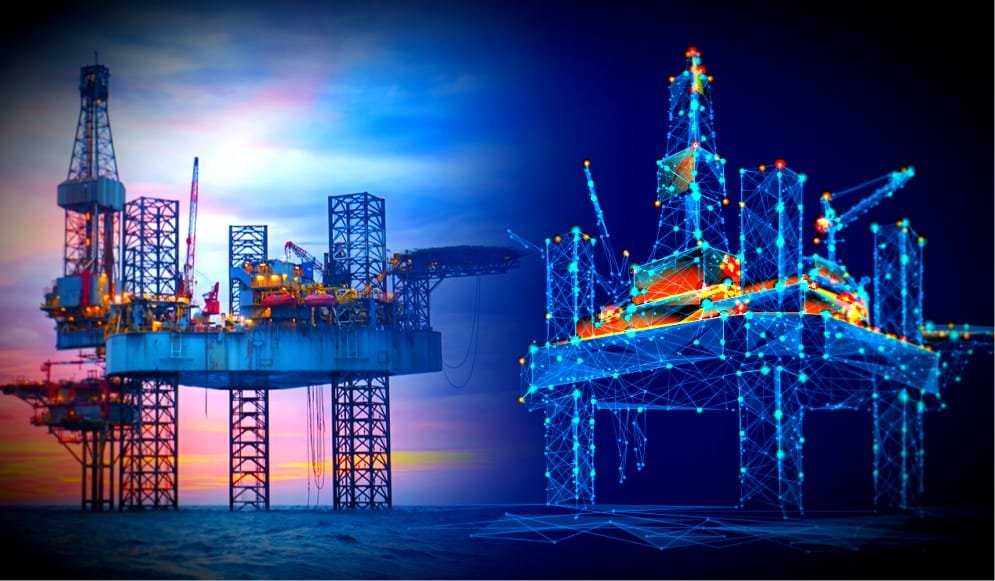

Oil and gas facilities often involve intricate networks of pipelines, wells, and processing equipment. Maintaining and optimizing these aging assets can be challenging.
Data on equipment performance, maintenance history, and sensor readings can be scattered across various systems. Integrating this data is crucial for building a realistic digital twin.
Testing new maintenance strategies or production scenarios on real-world assets can be risky and expensive. Digital twins offer a safe and cost-effective alternative.
Building and sustaining high-fidelity digital twins for large-scale oil and gas operations demand substantial computational resources. AI-driven solutions offer scalability and enhanced computational power, enabling efficient simulation, analysis, and optimization of complex systems to support informed decision-making and operational excellence.
Digital Twins Leveraging AI with Pranzant
Develop a comprehensive data integration platform to gather data from various sources (sensors, maintenance records, engineering schematics) and construct a high-fidelity digital replica of the physical asset.
Utilize machine learning algorithms to analyze real-time and historical data from the physical asset. Integrate this information with the digital twin to simulate various scenarios (equipment failures, production changes, maintenance interventions).
The digital twin should be continuously updated with new data and learnings from real-world operations. This ongoing process improves the accuracy of simulations and leads to better decision-making.
By simulating various maintenance scenarios within the digital twin, companies can pinpoint the most effective and cost-efficient maintenance approaches. Leveraging AI-driven predictive analytics, these simulations enable proactive maintenance scheduling, minimizing downtime, optimizing resource allocation, and maximizing asset reliability across the operational lifecycle.
Predictive maintenance leveraging the digital twin proactively prevents unexpected equipment failures, minimizing downtime and production losses. By continuously monitoring equipment health and performance indicators, AI-driven predictive analytics enable early detection of potential issues, allowing for timely interventions and optimized maintenance schedules to ensure uninterrupted operations and maximize productivity.
Through experimentation with various production scenarios within the digital twin, companies can pinpoint opportunities to optimize production processes and maximize output. Leveraging AI-driven simulations and predictive analytics, these insights enable informed decision-making, allowing for the implementation of efficient strategies that enhance productivity and profitability across the production lifecycle.